
How Much Does a Stone Patio Cost in 2026-2027? Mid-Missouri Guide

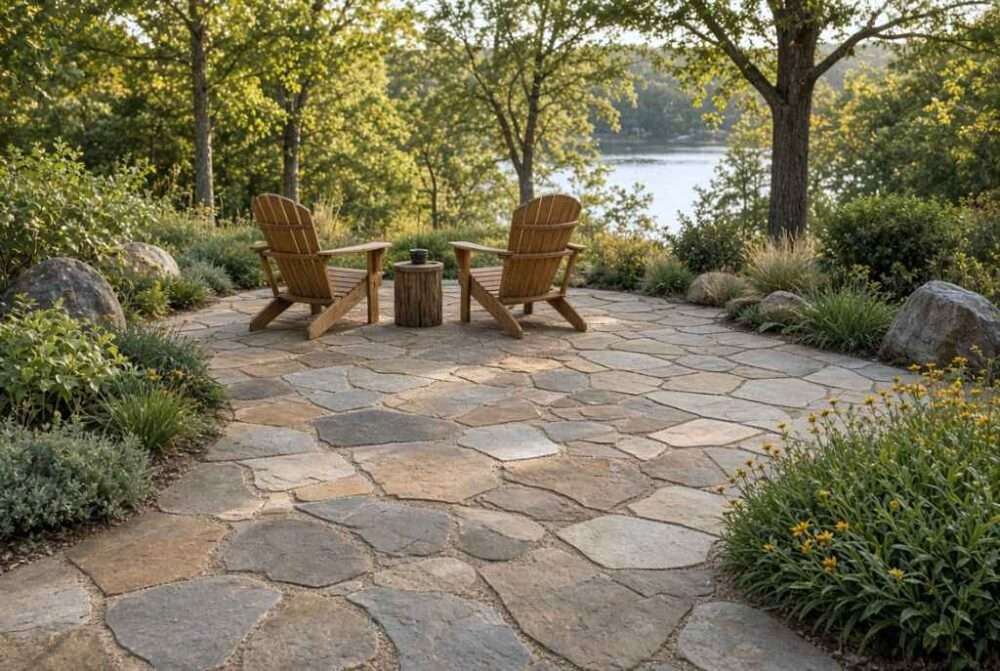
Completed natural flagstone patio with Adirondack chairs overlooking the lake in an Ozarks backyard.

Brief Overview

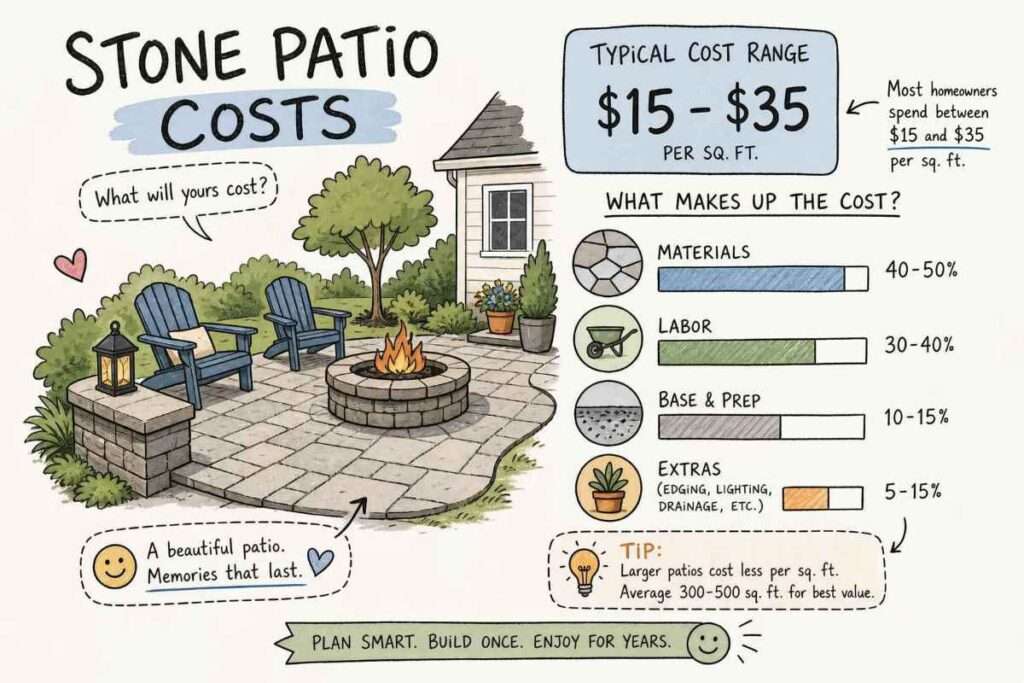
A professionally installed natural stone patio typically costs $15–$35 per square foot in 2026 (practical national midrange price range: $22–$24). A typical 300-square-foot patio runs roughly $5,100–$10,500 apart from site complications. Stone type, base preparation, installation method, and local conditions (especially Mid-Missouri clay soils and freeze-thaw) are the main factors that move the final number.

The approximate cost of a professionally installed natural stone patio is roughly $15–$35 per square foot in 2026. That puts a typical 300-square-foot patio in the $5,100–$10,500 range before site complications, with a practical national midrange cost of $22–$24 per square foot installed (according to Homewyse and HomeGuide data). Four main variables move the number: the stone you choose, site preparation needs, installation method (dry-laid vs. mortar-set), and local conditions. In Mid-Missouri—Osage Beach, Columbia, Jefferson City, Springfield, Lebanon, and surrounding areas—clay soils and freeze-thaw cycles often add to base work, so local quotes beat national averages.

Knowing why costs shift helps you compare bids accurately and avoid the common mistake of evaluating quotes that cover different scopes. At Southwest Stone Supply, we have helped Mid-Missouri homeowners and contractors since 2001 select stone that holds up in our climate. Seeing the material in person at our 6-acre Osage Beach yard (look for the big green cactus at 6386 Osage Beach Pkwy) prevents the surprises that photos can create.

Key Takeaways

  • National midrange cost: $22–$24 per square foot installed (Homewyse, Angi), with a typical 300-square-foot patio running $5,100–$10,500 depending on stone type and site conditions, a range that reflects the full national low-to-high spread of $15–$35 per square foot.
  • Stone choice matters: Flagstone, bluestone, and travertine each carry different price ranges and labor demands. Seeing the material in person before buying prevents costly surprises.
  • Labor adds up fast: Expect labor to add 50%–100% on top of your material cost, depending on installation method and project complexity (HomeGuide).
  • Site conditions (slope, clay soil, drainage) and installation method often drive the biggest swings.
  • In Missouri, simple at-grade patios frequently need no permit. However, raised, covered, or patios with electrical/gas connections usually do—be sure to check with your city or county.
Illustrated stone patio cost guide showing typical 2026 installed range of 5 to 5 per square foot with cost breakdown for materials, labor, base preparation, and extras.

How Much Does It Cost to Build a Stone Patio by Material?

Stone selection is the first major lever. Ranges within each type are wider than many expect. Irregular flagstone requires more cutting and fitting, which raises labor even when the stone itself is modestly priced. Cut or dimensional pieces install faster and cleaner.

Common options for Mid-Missouri patios include flagstone (sandstone, limestone, and similar flat natural stones), travertine, and other durable varieties that handle our weather. Cut flagstone or consistent pavers can lower labor relative to irregular pieces. Travertine offers a lighter, elegant look but needs proper sealing in freeze-thaw climates.

At Southwest Stone Supply we stock one of the largest natural stone and patio stone selections in mid-Missouri. Side-by-side comparison in the yard (or indoor showroom) shows real color and texture variation that screens miss. Related reading: our What Is Paving? Understanding Different Paver Styles and Patterns guide and Flagstone Pavers: 5 Ways They Make New Patios Superior. For Columbia-area pricing context, see the Natural Stone Cost Guide Columbia MO 2026.

Approximate national average installed price (standard labor, materials, and base prep included; difficult terrain or extra site prep costs more):

  • Flagstone (irregular): often $15–$28 per sq ft
  • Flagstone (cut/dimensional): $18–$32 per sq ft
  • Travertine: $16–$32 per sq ft
  • Other natural stone varieties: generally within the broader $15–$35 band

Local availability, thickness, and finish change these estimates. Always confirm current yard pricing and waste allowance (typically 10–15%).

Colorful flagstone walkway in front of a log cabin at Lake of the Ozarks!
Colorful flagstone walkway and patio area at Lake of the Ozarks, showing the natural color variation available in real stone.

How Labor and Installation Costs Stack Against Materials

Labor and installation add another $9–$17 per square foot on top of that, according to HomeGuide. A simple planning rule: labor usually adds 50%–100% of your material cost (HomeGuide). 

Dry-laid installation (compacted gravel and sand base, sand or polymeric joints) is the lower-cost option for most residential patios. It allows easier repairs and better handles Missouri freeze-thaw movement and clay soils than a rigid mortar-set job. Mortar-set (often over a concrete slab) costs more in time, materials, and skill; it suits formal designs, steep slopes, or very high-traffic areas where movement must be minimized.

For most residential patios under 400 square feet on a reasonably flat site, dry-laid flagstone or natural stone pavers deliver durable results when the base is done right. In central Missouri, plan on a minimum 6-inch compacted crushed stone base, increasing to 8 inches in areas with poor drainage or heavy clay. Skimping here is the most common reason patios fail within a few seasons.

Patio made of Flagstone pavers set in wooded area with gravel filler.
Irregular flagstone patio with gravel joints, showing a typical dry-laid installation.

What Hidden Costs Actually Drive the Bill Up

Site preparation is where budgets often get blown out. Some contractors include excavation, base, drainage slope, and edging in the per-square-foot price; others quote them separately. Always confirm inclusions before comparing bids.

Common add-ons or contingencies:

  • Extra excavation, grading, or tree/root removal
  • Deeper or reinforced base on clay or poorly drained soil
  • Drainage solutions (critical near foundations or in low spots)
  • Edging, steps, or retaining walls
  • Old patio or concrete removal
  • Delivery access challenges

Budget a 20%–40% contingency when any of these apply. The patio surface itself is rarely the expensive part once site conditions complicate the job.

Missouri has no statewide permit rule for patios; requirements are set locally. A simple at-grade patio on existing grade often needs no permit, but a raised patio, one with a cover or roof, or any with electrical or gas connections typically does. Contact your local building department early (Osage Beach Building Department: (573) 302-2030; Columbia and other cities have their own processes and fees). Fees vary; plan for possible inspections and setbacks. This is one area Missouri homeowners sometimes overlook.

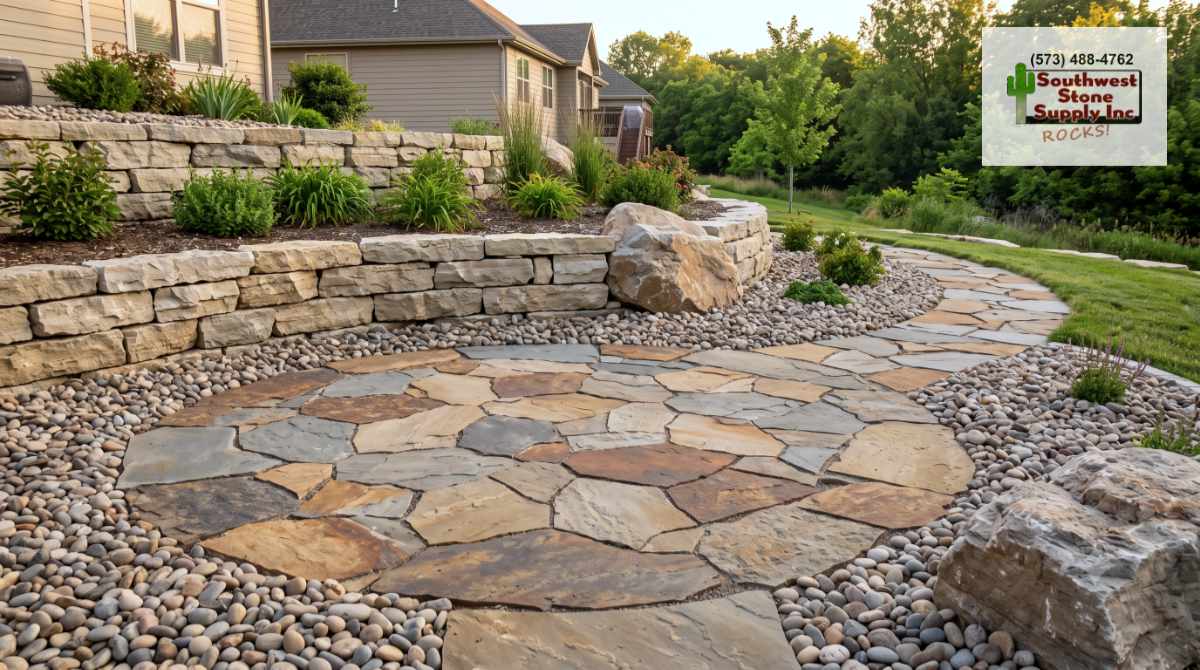
A detailed view of a terraced suburban backyard featuring a multi-level stacked stone retaining wall. An irregular, multi-colored flagstone patio and a winding flagstone path are bordered by extensive areas of smooth river rocks and gravel. A large boulder accentuates the curve of the wall. Landscaped gardens with mixed shrubs and grasses are visible, with green rolling hills and houses in the distance under a warm sunset glow.
Flagstone patio paired with natural stone retaining walls in a Mid-Missouri backyard, a common combination that affects both materials and site preparation costs.

DIY vs. Pro: Cost to Build a Stone Patio

Cost Item

DIY Estimate (200 sq ft)

Professional Estimate (200 sq ft)

Stone materials

$1,400–$3,600

Included in total

Base materials (gravel, sand)

$200–$600

Included

Labor

Your time (many hours of physical work)

$1,800–$3,400+

Tool rentals (compactor, saw, etc.)

$150–$400

Included

Waste, delivery, extras

Variable

Included in scope

Typical total

$1,800–$5,000+ (plus significant labor)

$3,200–$7,000+

Tool rentals may narrow the savings gap more than most DIYers account for. The cost of one’s physical time and effort must also be accounted for. DIY works best on flat lots with no major drainage issues, uniform cut stone or pavers that fit predictably, and homeowners comfortable with heavy labor who have time to do the base properly. It becomes risky with excavation equipment needs, curves, steps, irregular flagstone puzzle-fitting, or clay soils requiring a thick compacted base. For central Missouri sites, proper base depth is non-negotiable.

Many homeowners buy materials from a local yard like ours and hire pros only for installation, or handle simpler sections themselves. See our pavers and patio stone options and Columbia delivery notes on the Columbia Missouri page.

How Patio Size and Regional Location Shift the Final Number

Larger patios often cost less per square foot because fixed costs (delivery, mobilization, setup) spread out. Contractors may reduce the rate on bigger jobs. Get a quote for the larger size before assuming linear scaling.

Regional differences are real. Mid-Missouri pricing generally tracks Midwest averages, which are often a bit below coastal markets. The local caveat is clay soils and frost depth, which can increase base preparation if the contractor accounts for it properly. Our team understands these conditions from decades of projects around Lake of the Ozarks, Columbia, Springfield, Jefferson City, Lebanon, and surrounding areas. We also ship nationwide to the lower 48.

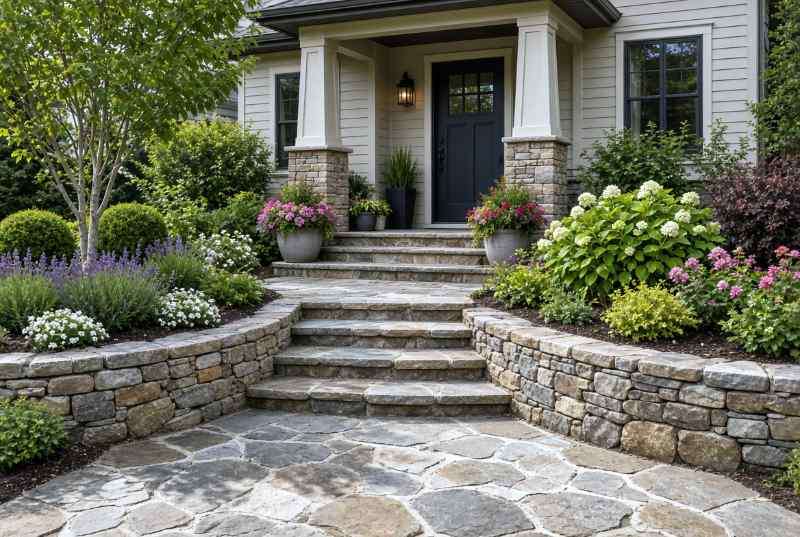
Natural stone steps and retaining wall, planter and garden border framing home entrance. Beautiful hardscape, colorful landscape design.
Stone walkway, steps, and retaining walls in a finished landscape setting.

What to Do Before You Request a Quote

The most accurate bids come from prepared homeowners who provide:

  1. Measured patio footprint (length × width, or sketch with dimensions).
  2. Honest description of slope, drainage, soil type, and access.
  3. Stone preference or two options to compare (bring photos of your yard if helpful).
  4. Notes on steps, retaining walls, fire pits, lighting, or other features.

Visiting a stone yard before finalizing the material choice is one of the highest-value steps. Photos and samples rarely capture full color range, texture, or how the stone looks at scale. Our team can help estimate quantities accurately based on your square footage and layout, which prevents two common budgeting mistakes: choosing stone that looks different once installed, and ordering the wrong amount.

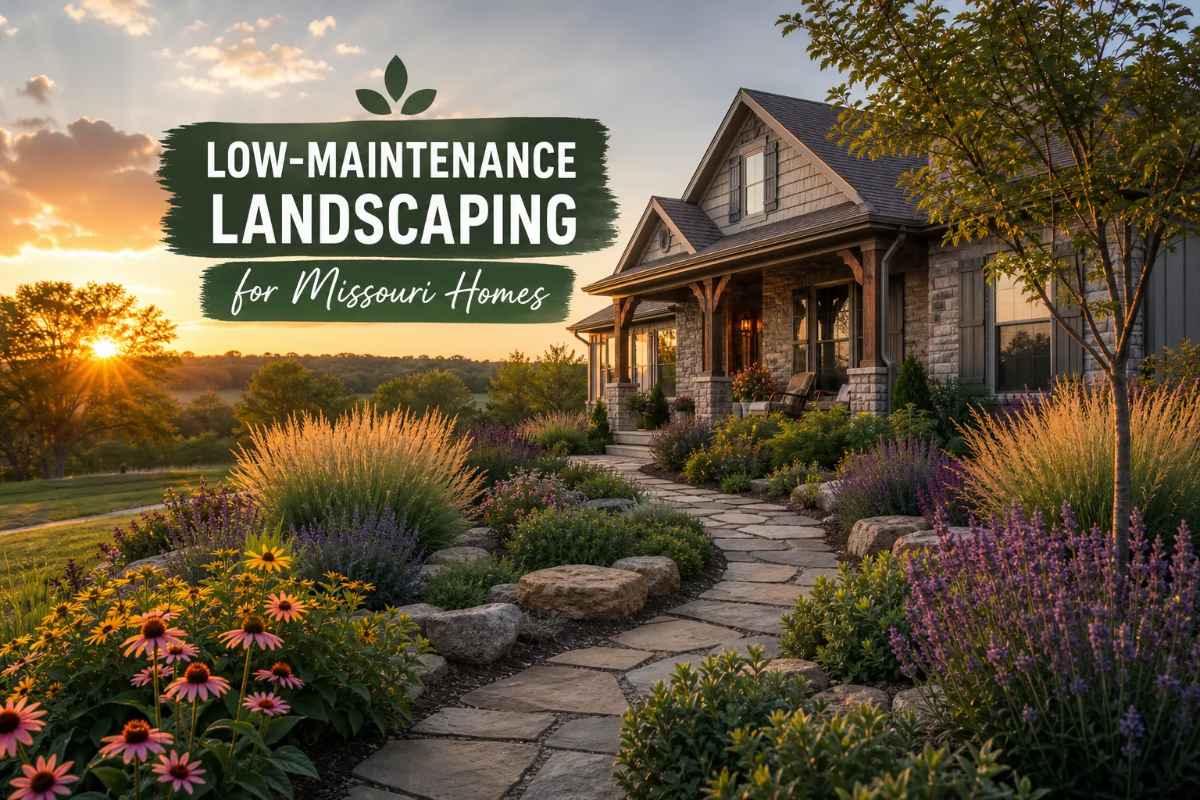
Low-maintenance landscaping at a Missouri home featuring a natural stone pathway, large boulders, ornamental grasses, and colorful drought-tolerant native plants including purple coneflowers during golden hour sunset.
Stone pathway and landscaping with boulders in a Missouri home setting — a good example of how natural stone integrates with the rest of the yard.

Why Mid-Missouri Homeowners and Contractors Choose Southwest Stone Supply

Since 2001 we have been the local and regional source for natural stone, landscaping rock, pavers, retaining wall block, and outdoor living products. Our 6-acre Osage Beach yard and indoor showroom let you see the largest selection in the area side by side. We understand Missouri soils, slopes, and weather. Pickup is easy (look for the big green cactus landmark), local delivery is available, and we also ship nationwide. Friendly expert advice helps DIYers and pros alike get the right stone and quantities the first time.

Frequently Asked Questions

Professionally installed natural stone typically runs $15–$35 per square foot, with a practical midrange of $22–$24. A 300-square-foot patio commonly falls between $5,100 and $10,500 before extras. Local site conditions in Mid-Missouri can move the number.

Yes. Color and texture variation in real stone rarely matches a screen. Comparing actual slabs side by side at a yard prevents costly surprises and helps you choose a look you will still like years later.

At least two or three detailed bids. Confirm exactly what each includes (base depth, drainage, edging, waste, cleanup) so you are comparing the same scope.

When excavation equipment is needed, the design includes curves or steps, irregular flagstone requires extensive fitting, or the site has clay soil that needs a thicker compacted base. Tool rental costs and the risk of a failing base also narrow the savings. Skipping proper base depth is the most common reason DIY patios fail in Missouri.

Possibly. There is no statewide rule; requirements are set by city or county. A simple at-grade patio often does not require a permit, while a raised patio, one with a cover, or one with electrical or gas connections typically does. Contact your local building department (for example, Osage Beach at 573-302-2030) before starting.

Proper base and slope handle most patio drainage, but river rock and landscape rock are excellent for surrounding beds, dry creek features, and managing runoff. See our drainage and landscape rock guidance for Mid-Missouri conditions.

Get a Realistic Patio Budget Before You Build

Material cost is only part of the picture. Know what your site requires, choose your stone with eyes on the actual material, and get detailed bids before committing. Stop by our Osage Beach yard to compare options and get a quantity estimate—it is the fastest way to build a realistic budget.

Ready to create your own patio paradise?

Call our Lake of the Ozarks area team at (573) 302-8855 or visit us at 6386 Osage Beach Pkwy, Osage Beach, MO, for expert advice, current pricing, and fast delivery. We ship nationwide, and we’ll help make your backyard patio the envy of the neighborhood!

Want to see more landscape & home improvement tips? You may find these posts helpful!