
Gravel Calculator for Missouri Landscaping – Real Examples from the Lake of the Ozarks

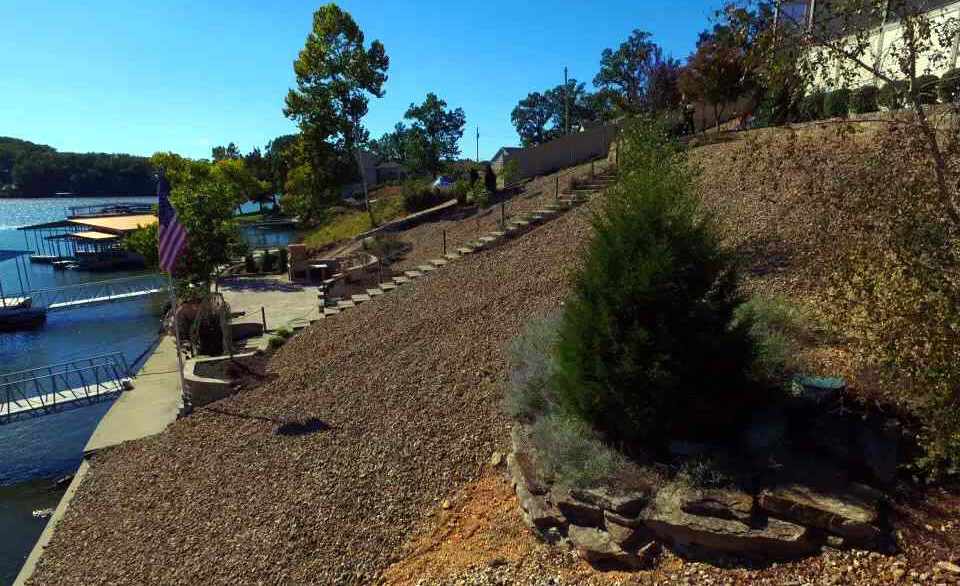
Gravel ground cover and stone steps on a lakeside Missouri slope at Lake of the Ozarks.

Do you need to figure out exactly how much gravel you need for a patio, driveway, French drain, or shoreline project around the Lake of the Ozarks? Well, good news! It doesn’t have to involve guessing or multiple trips to the yard. Measure length and width in feet, pick a depth based on the job (usually 2–3″ for paths and decorative areas, 3–4″ for patios and driveways, 4–6″ for drainage), and convert to cubic yards. Our free gravel calculator does the math in seconds so you order the right amount the first time.

Here are real-world examples drawn from the kinds of projects we see every season at Lake of the Ozarks, Osage Beach, Columbia, Springfield, and the surrounding Mid-Missouri hills. These use the same simple formula the calculator runs: (length × width × depth in feet) ÷ 27 = cubic yards. We recommend adding 10% extra for compaction, settling in Missouri clay, and uneven ground common on Ozarks slopes.

Real Examples from the Lake of the Ozarks (and Beyond!)

Osage Beach backyard patio: 12 ft × 20 ft at 3″ depth → about 2.2 cubic yards

Ideal for a seating area or fire-pit surround using river rock, pea gravel, or a colorful blend like Alabama Sunset or Ozark Rainbow. Plenty of coverage without leftover piles.

French drain on a Columbia hillside:  50 ft × 2 ft at 6″ depth → about 1.85 cubic yards

Larger river rock or clean drainage stone lets water move freely through the clay soils and freeze-thaw cycles we get here. A common fix for wet spots after heavy spring rains.

Springfield-style driveway resurface:  20 ft × 50 ft at 4″ depth → about 12 cubic yards (one full truckload)

Crushed limestone or trap rock packs well and stands up to vehicle traffic and Mid-Missouri weather. Perfect when you’re refreshing an existing drive or building a new approach.

Lakefront dry creek bed or drainage swale (Osage Beach / Lake Ozark):  40 ft × 3 ft at 6″ depth → about 2.2 cubic yards of larger river rock

Bigger stone holds better against wave action, boat wakes, and seasonal water fluctuations near the shoreline. A practical and natural-looking solution many lake homeowners choose.

Garden path or outdoor living path (Sunrise Beach or Camdenton):  25 ft × 4 ft at 2½″ depth → roughly 0.8–1 cubic yard

Pea gravel or smaller river rock creates a comfortable walking surface that drains quickly after Ozarks storms. Easy to edge and keep tidy.

Local Tips for Gravel Depth on Lake of the Ozarks Projects

These numbers line up with the depth and coverage guide on our main calculator page. For decorative beds, 2″ is often enough. For anything structural or high-traffic, go deeper and choose angular material that locks together. On steeper Lake of the Ozarks lots we frequently suggest a base layer plus a top course so the gravel stays put through winter freeze-thaw.

Missouri clay and our local weather mean a little extra material usually pays off. The calculator already accounts for standard depths; just measure carefully (or break irregular areas into rectangles) and you’ll avoid the frustration of running short mid-project.

Here are a couple of additional resources with helpful tips and information:

Ready to Turn Your Numbers into Real Gravel?

When you’re ready to turn those numbers into real stone, browse our selection of bulk gravel, river rock, crushed limestone, and decorative stone. We stock everything from fine pea gravel to larger river rock right here in our Osage Beach yard and can help match the right product to your soil and slope.

Ready to create your piece of paradise?

Call (573) 302-8855 or visit us at 6386 Osage Beach Pkwy, Osage Beach, MO. We ship nationwide!

Want to see more landscape & home improvement tips? You may find these posts helpful!